How to Create a Media Kit That Helps You Get Brand Deals
A media kit earns brand deals when it answers a brand's questions in one place: who you are, who follows you, what your content actually achieves, what they can hire you for, and how to reach you. Keep it to four to seven pages, use your own latest analytics, and end it with one professional page a brand can act on.
You can have 20,000 followers, decent engagement and a feed that looks professional, yet still struggle to get brands to take you seriously.
The problem is often not your audience. It is what happens when a brand manager wants to know more about you.
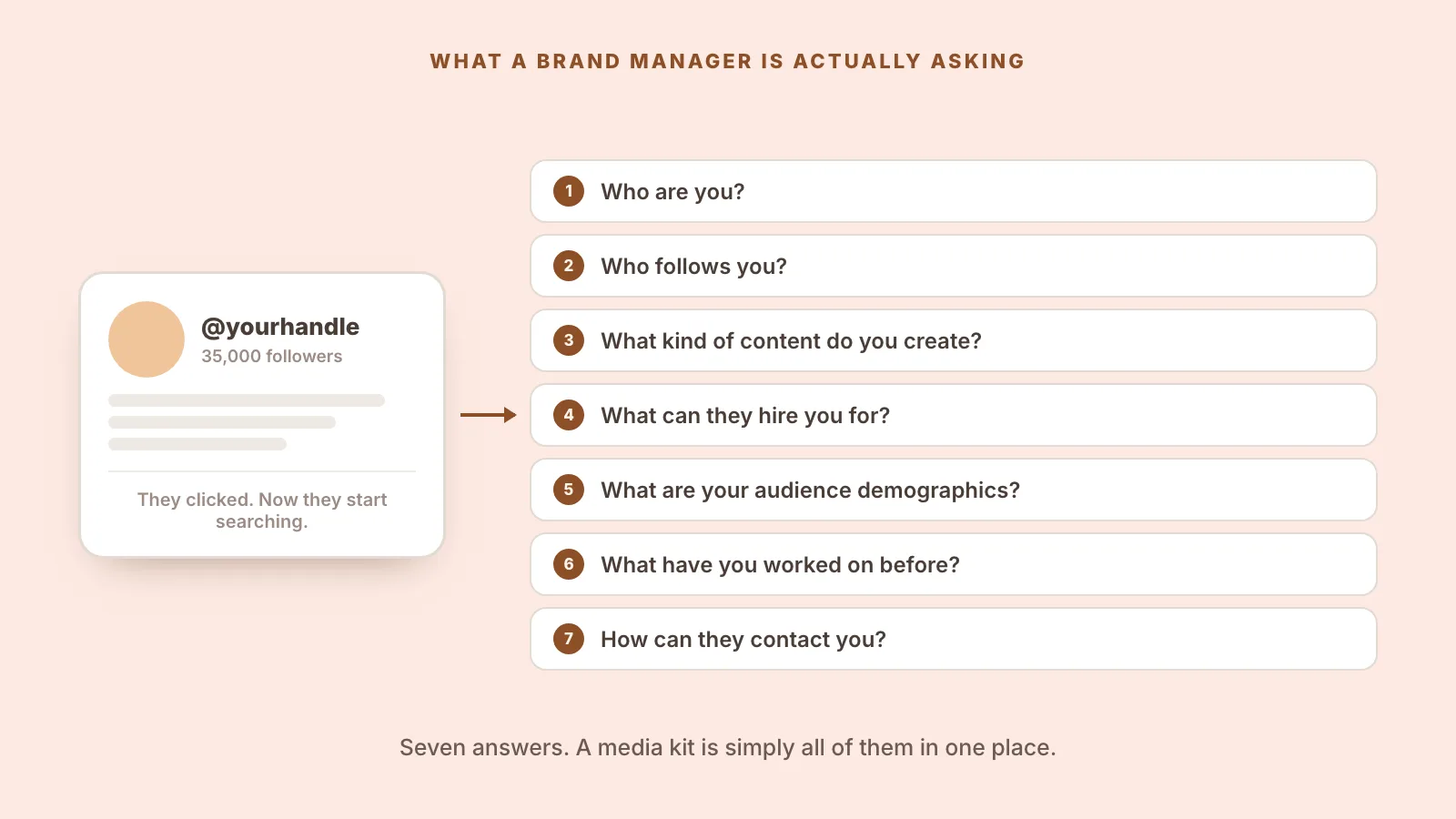
They click your profile and start searching.
Who are you?
Who follows you?
What kind of content do you create?
What can they hire you for?
What are your audience demographics?
What have you worked on before?
How can they contact you?
If the answers are scattered across Instagram posts, old messages and screenshots, the brand has to do the work.
And when a brand has dozens of creators to evaluate, that extra effort can be enough to move on to someone else.
This is where a good media kit becomes important. It gives brands a quick, professional picture of who you are, what you offer and why working with you makes sense.
But a media kit should not feel like a long CV. It should work more like a sales document. It needs to create interest, establish credibility and make the next step easy.
Here is how to create one that actually supports your brand deals.
1. Start With the Question Every Brand Wants Answered
Before opening a design tool or writing your first paragraph, think like the person on the other side.
A brand is not simply asking, "How many followers does this creator have?"
They are trying to understand:
Can this creator help us reach the right people?
That means your media kit should quickly communicate your niche, audience, content style and commercial opportunities.
For example, if you are a fitness creator with 35,000 Instagram followers, simply writing:
35K Followers
does not tell a brand much.
A stronger presentation could explain that your audience is primarily interested in home workouts, nutrition and weight management, with strong engagement from Indian audiences between a particular age range.
The second version gives the number context.
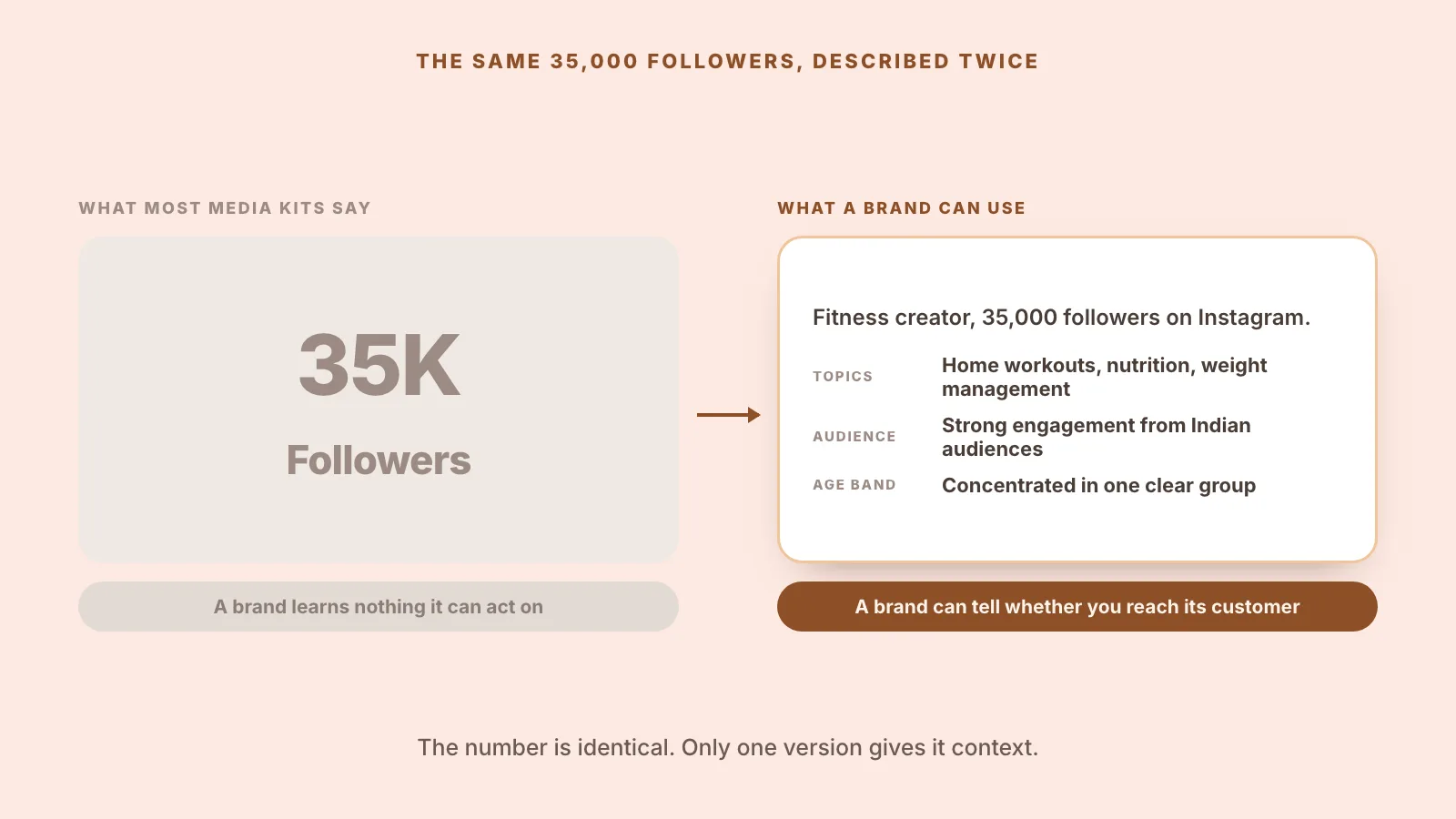
And context is what makes a follower count useful.
2. Your First Page Needs to Sell Your Positioning
Do not start with a huge paragraph about yourself.
Start with your identity as a creator.
Your first page should normally include:
Your name or creator name
Your niche
Your main social platform
Your follower count
Your strongest audience or engagement metric
A professional photograph
Your contact information
Your brand or creator logo
Think of this page as your introduction in a room full of people.
You may only have a few seconds to create the right impression.
If a skincare creator opens with a clear positioning statement such as
Beauty Creator | Indian Skincare | Product Reviews & UGC
a brand immediately understands what they are looking at.
That is much stronger than simply writing "Content Creator."
3. Use Data, But Do Not Turn the Media Kit Into a Spreadsheet
This is where many creators get it wrong.
They collect every number available from their social media dashboard and put everything into the media kit.
The result can look impressive, but it becomes difficult to understand.
Instead, select the metrics that support your commercial value.
For example:
| Metric | Example |
|---|---|
| Instagram Followers | 35,000 |
| Average Reel Reach | 48,000 |
| Average Story Views | 5,800 |
| Engagement Rate | 4.70% |
| Monthly Content Reach | 620,000 |
| Audience Location | India 86% |
| Primary Age Group | 18-34 |
Illustrative figures for layout only. Do not copy these numbers unless they are actually yours. Your media kit should always use your latest platform analytics.
The important point is that brands need evidence, not inflated numbers.
If your audience is smaller but highly relevant, show that.
A creator with 12,000 followers who reaches the exact audience a niche brand wants can be more valuable than a creator with 100,000 followers whose audience has little connection with the product.
4. Show Brands Who Your Audience Actually Is
Your follower count tells only half the story.
A brand also wants to know whether your audience matches its target customer.
Include information such as:
Audience location
For an Indian creator, this can be especially useful. If most of your audience comes from India, say so clearly.
You can also break it down by cities if the data is meaningful.
For example:
Age, gender and interests
Age: Show the major age groups rather than listing every available category.
Gender: If your audience has a clear gender concentration, include it.
Interests: This can help brands understand the type of community you have built.
For example:
The more relevant the information, the easier it becomes for a brand to decide whether you are a fit.
5. Add Your Best Work Instead of Showing Everything
A media kit is not your entire content archive.
You do not need to include 30 screenshots.
Choose your strongest examples.
If you have previously worked with brands, show a few campaigns and explain what you did.
For example:
Campaign: Fitness Product Launch. Deliverables: 1 Reel + 3 Stories. Result: 72,000 Reel views + 1,800 link clicks.
Or:
Campaign: Beauty Product Integration. Deliverables: Product review + tutorial. Result: 5.2% engagement rate.
Real campaign results are much stronger than simply saying:
"I have worked with many brands."
If you have not worked with brands yet, that is fine too.
Show your strongest organic content and explain why it demonstrates your ability to create content for commercial partnerships. The same argument, applied to winning clients rather than brand deals, is in how to get clients on Instagram without a large following.
6. Clearly Explain What Brands Can Hire You For
Do not make a brand manager guess what you offer.
Create a simple section such as:
Collaboration opportunities
Sponsored Reels: Product-focused short-form videos designed around your existing content style.
Story Campaigns: Product mentions, demonstrations, links and calls to action through Stories.
Product Reviews: Detailed content for products that genuinely fit your audience.
UGC Content: Original videos or photographs that brands can use on their own channels.
Long-Term Partnerships: Monthly or campaign-based collaborations for brands looking for consistent creator visibility.
You can add your pricing if you want to make it public.
If you prefer negotiating rates individually, you can simply write:
"Custom packages available based on campaign requirements."
The important thing is to make your commercial possibilities clear.
7. Make Your Brand Identity Consistent
A media kit is also a test of your professionalism.
If your Instagram uses one visual style, your media kit uses another and your logo looks different again, the overall impression becomes fragmented.
This does not mean you need an expensive design.
You need consistency.
Use the same:
Logo
Creator name
Brand colours
Typography
Photography style
Social handles
You can use Setav's free Logo Maker to create a simple logo or wordmark if you do not already have one. Setav also provides a collection of free browser-based tools through its All Free Tools section.
The objective is not to make the media kit look like a corporate brochure.
It should still feel like you.
8. Add a QR Code to Make the Media Kit More Useful
This is a small addition that can make your media kit much easier to use.
Suppose a brand receives your PDF during an event or through email.
Instead of making the person manually search for your Instagram profile, portfolio or contact page, give them a direct path.
A QR code can take them to:
Your professional storefront
Your Instagram profile
Your portfolio
Your booking page
Your contact page
Setav's QR Code Generator can be used to create a QR code for the relevant link and include it in your media kit.
Keep it somewhere visible, but do not make it the largest element on the page.
The QR code should support your media kit, not replace it.
9. Give Brands One Place to Continue the Conversation
This is where a media kit can become more than a PDF.
Imagine a brand manager finishes reading your media kit and wants to explore your services.
If they have to go back to Instagram, search through your bio and then figure out how to contact you, you have added unnecessary friction.
A professional storefront gives them somewhere to go next.
With Setav, you can create a professional storefront where you can showcase your services, social links, booking options and other important information from one place. The platform also supports payments, forms, bookings and client management. The longer case for that page is in why every influencer needs a storefront.
You can therefore use your media kit to introduce yourself and then direct the brand to your Setav page for the next step.
For example:
Interested in working together? View collaboration options, explore my work and get in touch through my professional page.
That is a much cleaner journey than:
Media Kit → Instagram DM → "Hi" → "Please send your requirements" → Back-and-forth
10. Make Contacting You Extremely Easy
This sounds obvious, but it is one of the easiest things to get wrong.
Your media kit should clearly show how a brand can contact you.
Include:
Business Email: yourname@email.com
Instagram: @yourhandle
Location: Mumbai, India
Professional Page: your Setav bio link
If you have a manager or agency, include those details instead.
Avoid making brands search for your email address in a social media profile.
You want the next action to be obvious.
11. Do Not Forget About Your Creator Story
Numbers matter, but brands are also buying your voice.
A short introduction can explain why your audience follows you and what makes your content different.
For example:
"I create practical fitness content for young Indian professionals who want to build healthier routines without complicated diets or expensive gym plans."
That tells a brand much more than:
"I am a fitness influencer who loves helping people."
Keep it genuine.
Your media kit should sound like the creator behind the account, not like a generic marketing agency wrote it.
12. Keep It Short Enough to Be Read
Your media kit does not need to be 15 pages.
For most individual creators, 4 to 7 strong pages can be enough.
A practical structure could be:
Who You Are: Creator name, niche, photograph and key numbers.
Your Audience: Demographics, locations, interests and engagement information.
Your Content: Your strongest content examples and performance metrics.
Brand Collaborations: Past campaigns, brands and results.
What You Offer: Reels, Stories, UGC, reviews, long-term partnerships and other options.
Why Work With Me: Your strengths, content style and relevant audience insights.
Let's Work Together: Email, social profiles, QR code and your professional Setav page.
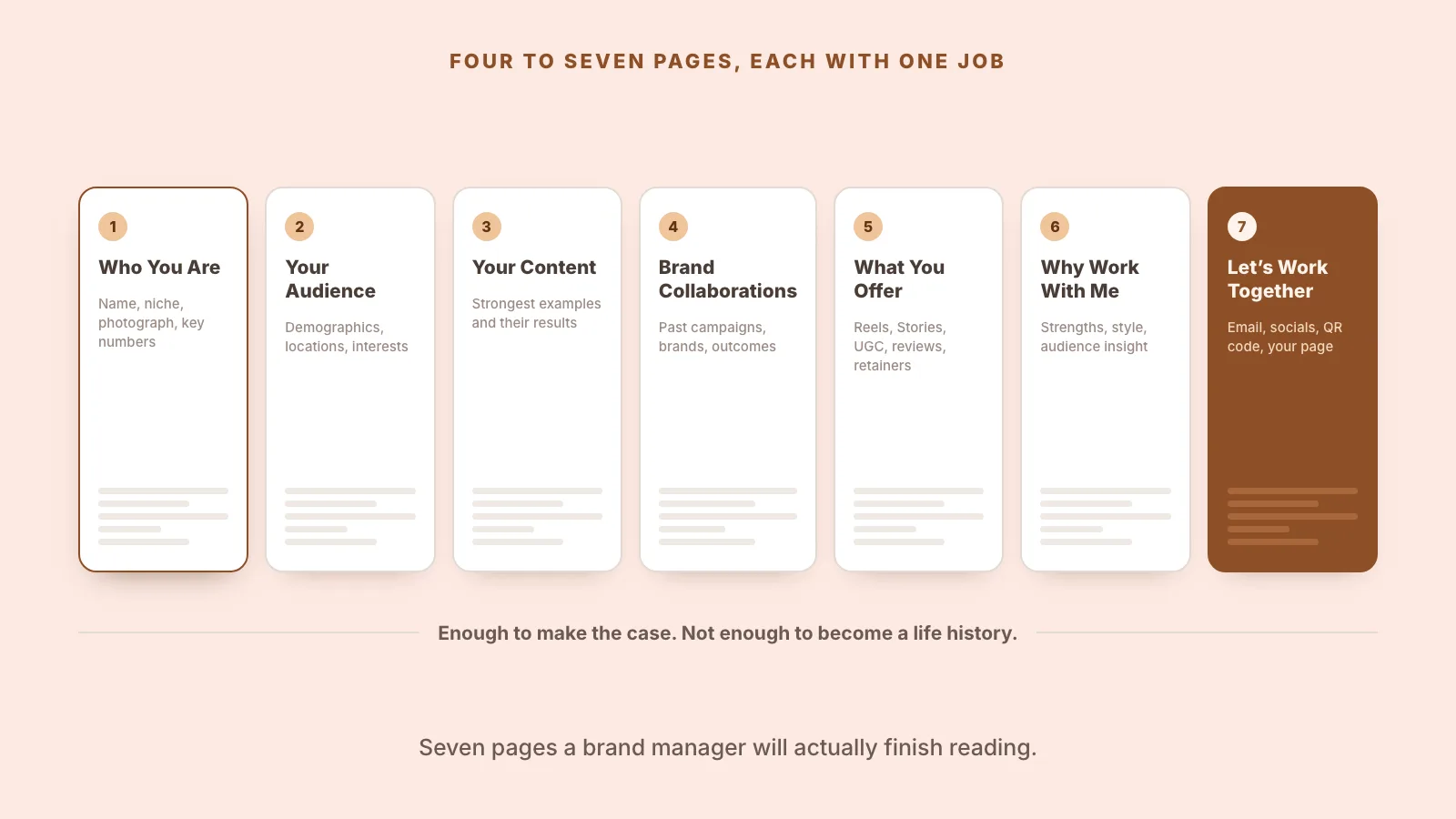
That is enough to tell a compelling story without making the brand manager read your life history.
The Media Kit Should Lead Somewhere
This is the part creators often overlook.
A media kit is not the final destination.
It is part of your sales funnel.
Think about the journey:
Instagram Content → Profile → Media Kit → Professional Storefront → Enquiry / Booking → Brand Deal
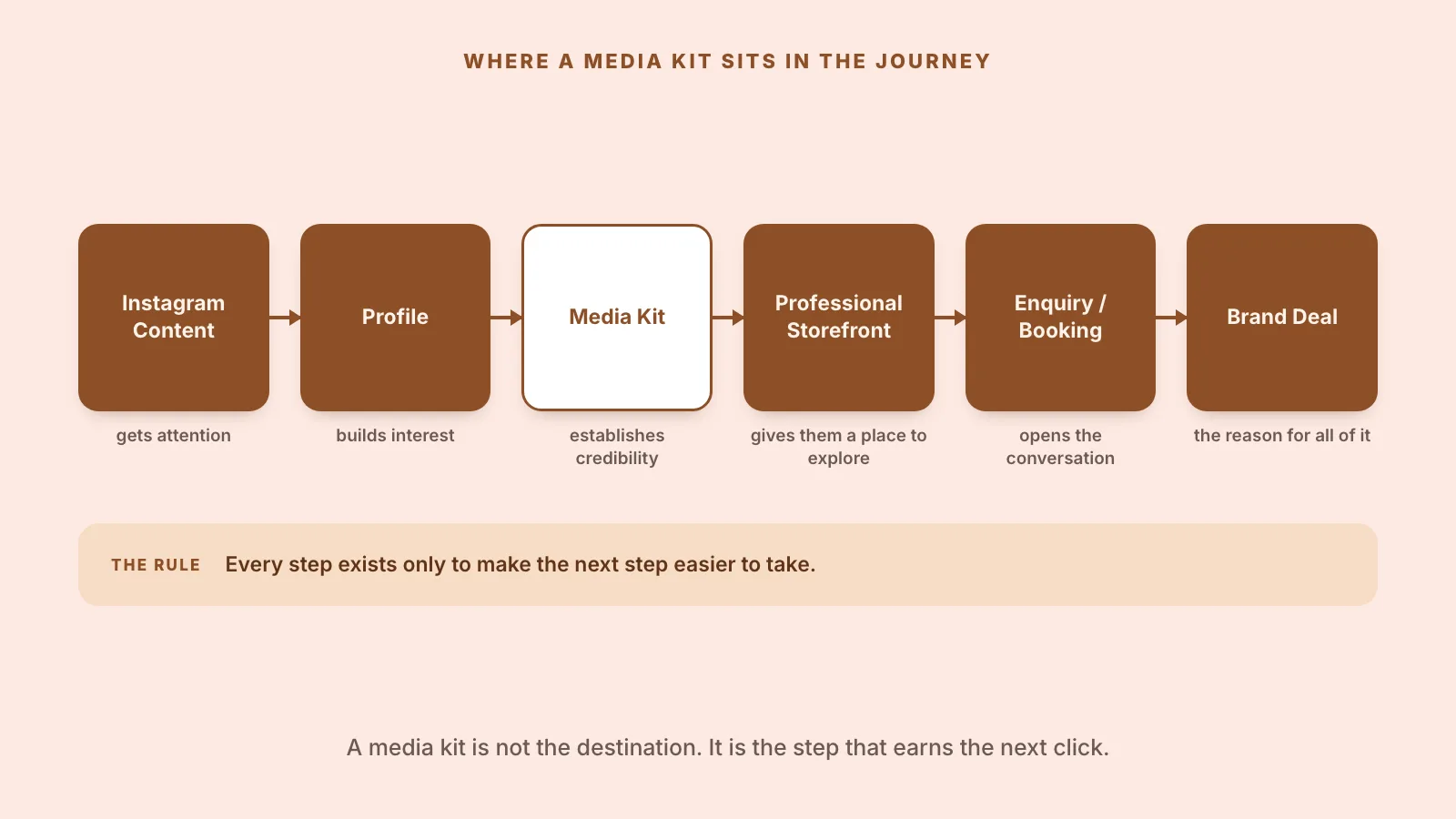
Every step should make the next step easier.
Your content gets attention.
Your profile builds interest.
Your media kit establishes credibility.
Your professional storefront gives the brand a clear place to explore what you offer and contact you.
Setav is useful here because your storefront can bring your services, social links, bookings, forms and other business information together rather than forcing potential clients or partners to jump between multiple pages. The difference between that and a plain list of links is covered in why every creator needs a link-in-bio store.
And if you are still building your creator business, you do not have to start with an expensive website. Setav's Basic plan is free forever and includes a Setav storefront link, unlimited links and service listings, calendar-based booking, online payments, client management and basic analytics. A branded website on your own address is a separate, paid thing: that is Go Pro, and the case for it is weighed against hiring a developer in Setav versus a traditional custom-built website.
Where Do You Go From Here?
A good media kit will not magically get you brand deals.
But a bad one can make a potential partnership harder than it needs to be.
Before you send your next pitch, look at your media kit from a brand's perspective.
Can they understand who you are in 10 seconds?
Can they see whether your audience matches their customer?
Can they see evidence that your content performs?
Do they know what they can hire you for?
Can they contact you without starting a long search?
If the answer is yes, you are already ahead of many creators who simply send a follower count and an Instagram handle.
Use your strongest numbers, show your best work, keep your positioning clear and make the next step simple. Use Setav's free tools to create supporting brand assets such as a simple logo and QR code, then use your Setav storefront as the professional destination behind your media kit. If part of what you sell is downloadable rather than a campaign, the companion post on selling digital products on Instagram without a website covers that side of it.
Because brands do not just want to know how many people follow you.
They want to know what you can help them achieve.
And your media kit is your chance to answer that before the first call even happens.
Frequently Asked Questions
A creator media kit should include your name and niche, your main platform and follower count, your strongest audience and engagement metrics, audience demographics such as location, age and interests, a few pieces of your best work with real results, what brands can hire you for, a short creator story, and a clear way to contact you.
For most individual creators, four to seven strong pages is enough. A practical structure is who you are, your audience, your content, brand collaborations, what you offer, why work with you, and a closing page with your contact details and links. Anything longer usually makes a brand manager work harder rather than making your case better.
Choose the metrics that support your commercial value rather than every number your dashboard reports. Follower count, average reach per format, average story views, engagement rate, monthly content reach, audience location and primary age group are usually enough. Always use your own latest platform analytics, never borrowed or rounded-up numbers.
No. If you have not worked with brands yet, show your strongest organic content instead and explain why it demonstrates your ability to create content for commercial partnerships. A smaller, highly relevant audience can be more valuable to a niche brand than a large audience with little connection to the product.
You can, if you want your pricing to be public. If you would rather negotiate each campaign individually, write "Custom packages available based on campaign requirements" instead. What matters is that your commercial possibilities are clear, so a brand knows what it can hire you for before it contacts you.
A media kit is often read as a PDF, at an event or in an email, where a link is not always tappable. A QR code gives the reader a direct path to your storefront, portfolio, booking page or contact page without making them search for you. You can build one with Setav's free QR Code Generator. Keep it visible but small; it should support the media kit, not replace it.
Send them to one professional page rather than back to a social profile. A Setav storefront can hold your services, social links, booking options and contact details in one place, so a brand manager who has finished reading can explore what you offer and get in touch without starting a new search.
Give your media kit somewhere to land. One page with your services, links, booking and contact details. Free to start, no credit card.
Turn conversations into customers with Setav's smart all-in-one professional storefront platform.
All Rights Reserved © Setav 2026